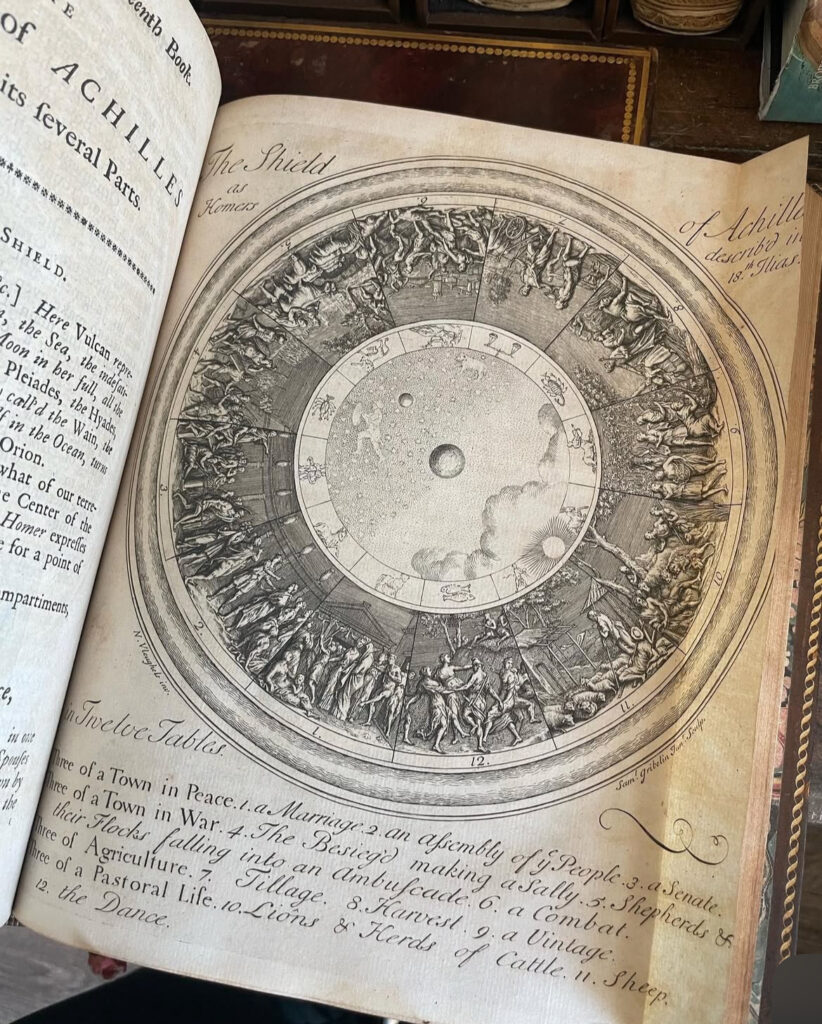

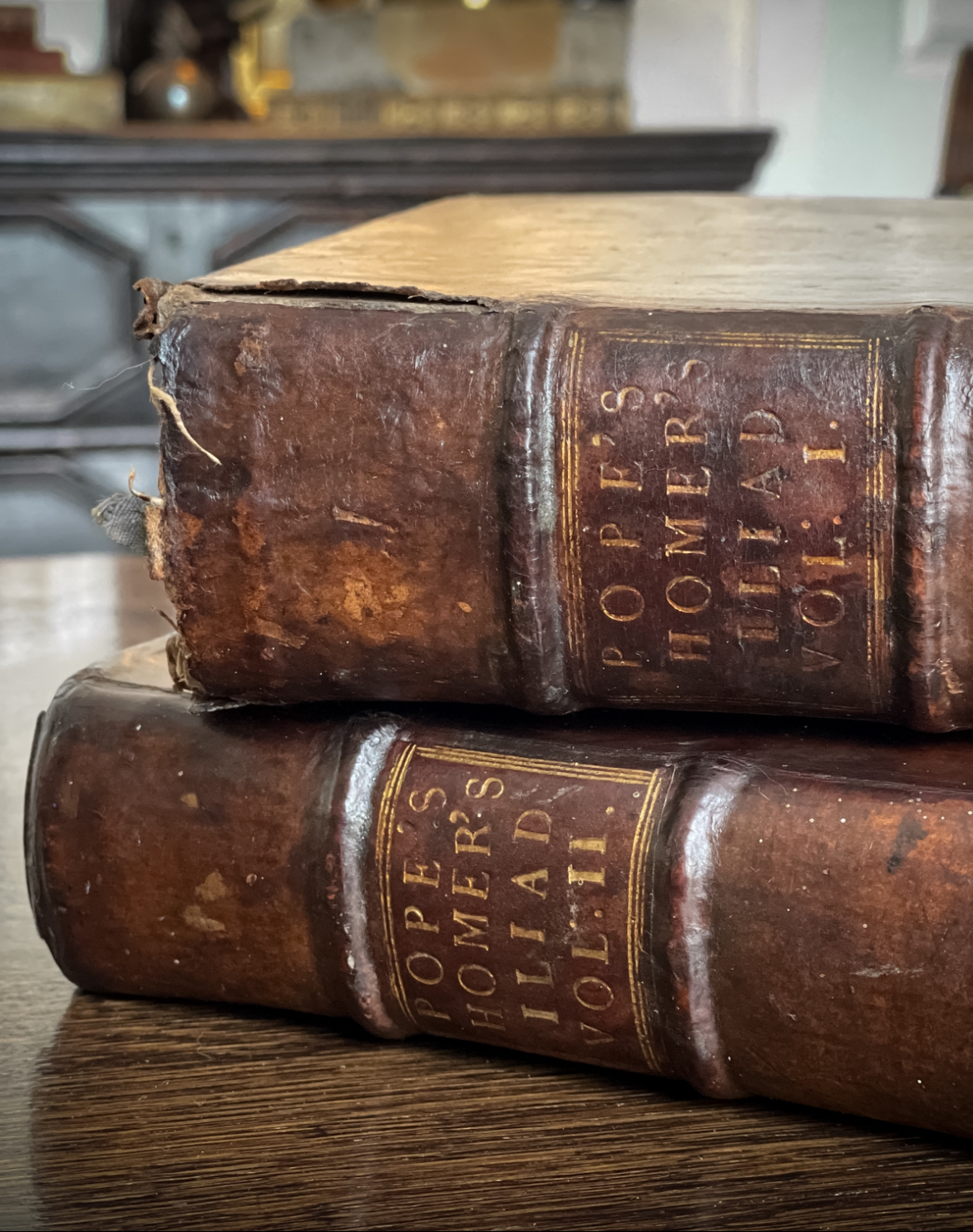

Without a doubt one of the most recognizable stories passed down from antiquity, Homer’s epics, The Iliad, the story of the mighty Achilles and the fall of the golden city of Troy, and The Odyssey have captured imaginations for nearly three millenium. Remarkably, for the first
Lets imagine, for a moment, you’re out for a leisurely stroll along Cecil Court in modern day London, you were suddenly inclined to approach the first ten people you saw and ask them to name a story from the ancient world that was not related to a specific religion, after the quizzical looks subsided, there’s a better than zero chance that the story of Achilles and the sack of Troy would be mentioned. Brad Pitt and Orlando Bloom could probably claim some small credit with the millennial cohort, but the continued popularity of the nearly 2,800 year old Greek epic is evident in it’s 50+ translations into English over the last 400 years.
Among these translations are a few standouts. While Arthur Hall was technically the first to translate the Iliad into English, he only completed the first ten books of the poem, and translated these not from the original Greek, but from French. The first complete English translation from the original Greek was completed in 1611 by George Chapman, with the Odyssey following in either 1614 or 1615. Chapman spent a total of 26 years translating Homeric works.
After Chapman was John Ogilby’s 1656 translation of the Iliad, a work which fell flat with critics who found the verse he applied lacking in appeal. It is, after all, possible for one to adequately fill the shoes of a linguist but not those of a poet. The ever fickle critics were assuaged twenty years later when Thomas Hobbes remedied the situation with his 1676 translation of the Odyssey which was met with enough praise to encourage him to produce an Iliad shortly thereafter.
Of all the works of antiquity, the Homeric texts of the Iliad and Odyssey have been some of the most universally known and celebrated throughout their 2,750 years of existence.
It’s estimated that Homer composed his Iliad and Odyssey between 750 and 800 BC. Over 500 years after it was first told, the Roman poet Virgil leaned on Homer’s Iliad as a model when crafting his Latin epic, The Aeneid.
While translations and interpretations go in and out of vogue with the times, the evergreen