

On the corner of Reading and William Howard Taft Rd, a stones throw from downtown Cincinnati rests an unlikely oasis. The 8 acres of lush greenery composing the Hauck Botanic Garden exists as a testament to one mans love of nature and a desire to share it’s restorative power with a world he witnessed slowly being swallowed by concrete.
The garden was the vision of Cornelius J Hauck (1893 – 1967), heir to a beer brewery fortune built by his grandfather John Hauck, a prominent German-American immigrant, who established the successful John Hauck Brewing Company in 1863. John’s business savvy carried him from brewing to banking, where he served as president of the German National Bank, to majority owner of the Cincinnati Red Stockings baseball club.

The history of John Hauck and the 19th century Cincinnati brewing scene itself is an interesting one that could fill many pages. I’ve linked a book below for anyone looking to take a deep dive.
Industrial-era Cincinnati, like many cities of the eastern and midwestern United States, experienced both the prosperity and the environmental strain of rapid, under-regulated growth. It was against this backdrop that Cornelius recognized the value of bringing dedicated green spaces to the cities residents, devoting 18 years to this mission while serving on the board of Cincinnati Parks. He considered himself first and foremost a gardener and kept a close circle of horticulturalists and botanists with whom he regularly consulted.
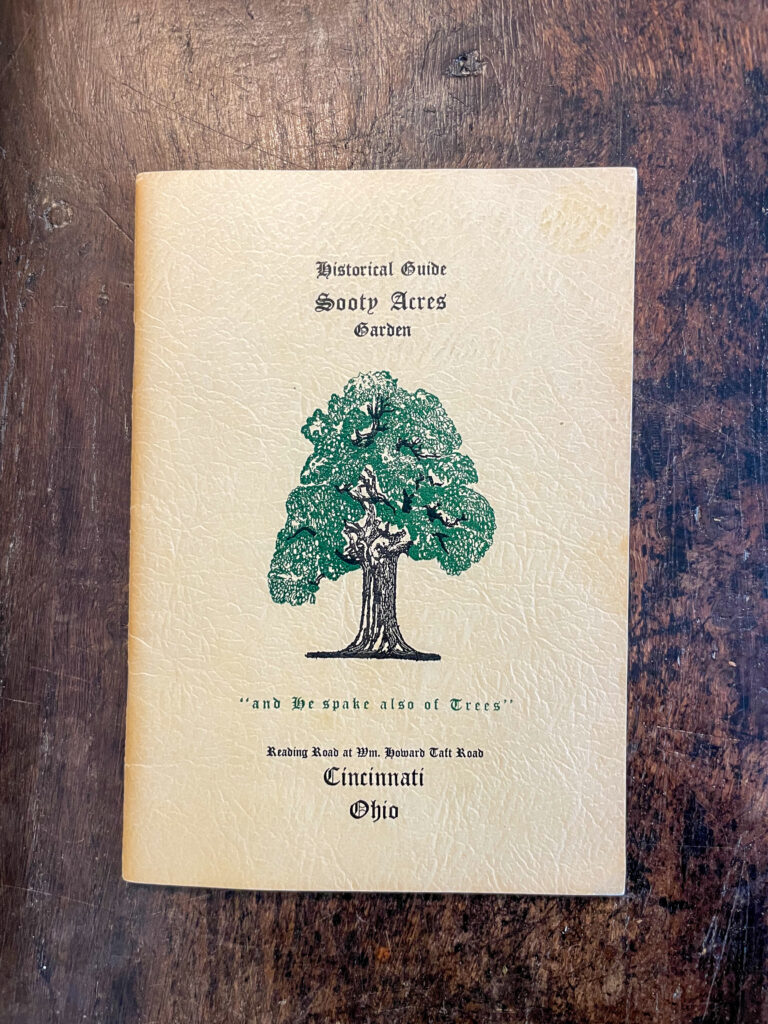
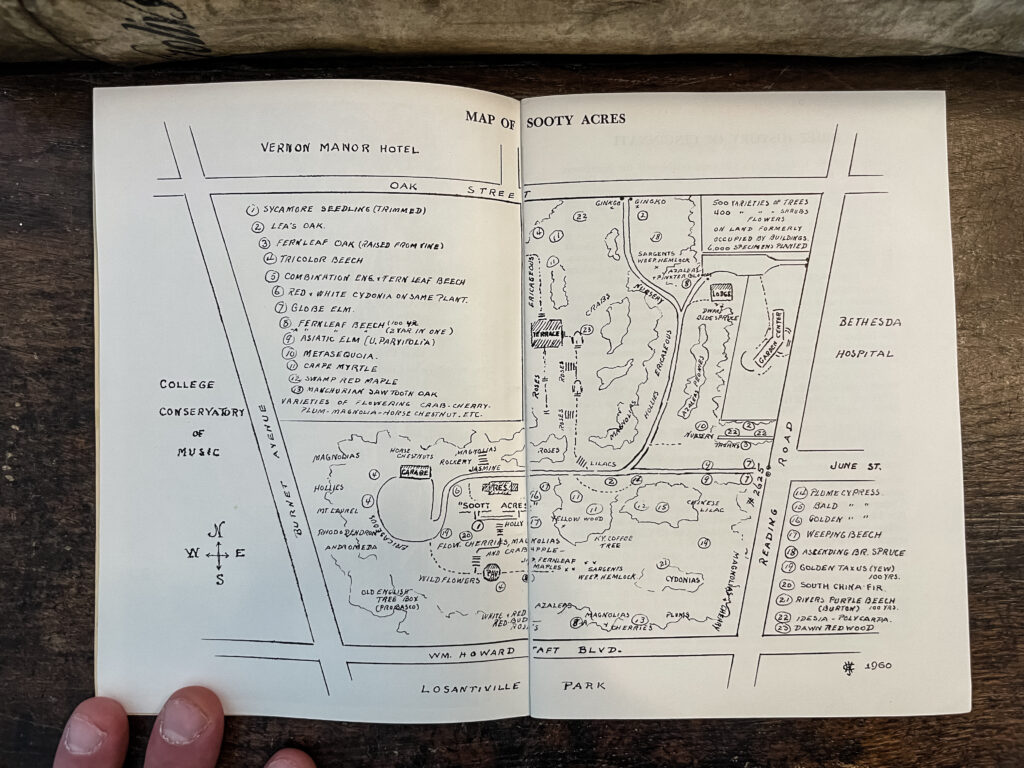
Cornelius bought the land on which the garden sits in 1924 and set to work transforming the space into a sylvan paradise. The historical guide that he provided to visitors of “Sooty Acres” (a name he facetiously gave to the garden because of it’s proximity to Cincinnati’s factories) in the early 1960’s includes a brief history of the area as well as a charming map of the grounds hand-drawn by Cornelius himself. The map details the precise location of each one of his most beloved trees as well as the location and variety of various flowers and shrubs. In all, the garden was home to over 500 varieties of trees, 400 varieties of shrubs and 6000 specimens of flowers, proudly noted in a legend in the upper right corner.
Over his lifetime Cornelius amassed an outstanding collection of books focused on the subject of botany, ranging from trees and horticulture to landscape design. Parallel to this passion was an interest in history which he channeled into gathering what would become a world class collection of literary material focused on the history of the book. Beginning around 1945 he invested considerable time and resources assembling a collection of hundreds of choice examples of books, manuscripts and other objects that traversed nearly the entire timeline of the written word, spanning from ancient Mesopotamia, Egypt and Greece to the 19th century, guided by the highly regarded bookseller Emil Offenbacher. In 1966, a year prior to his death, he donated the entire collection to the Cincinnati Historical Society, which later became the Cincinnati Museum Center.
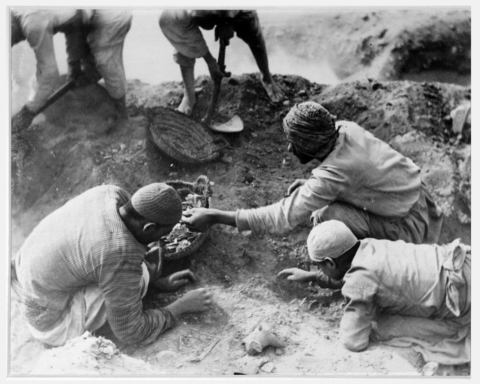
In addition to books and manuscripts Hauck’s collection contained a range of treasures, like clay tablets, cuneiform cones, cylinder seals, papyrus scroll fragments, and asian antiquities.
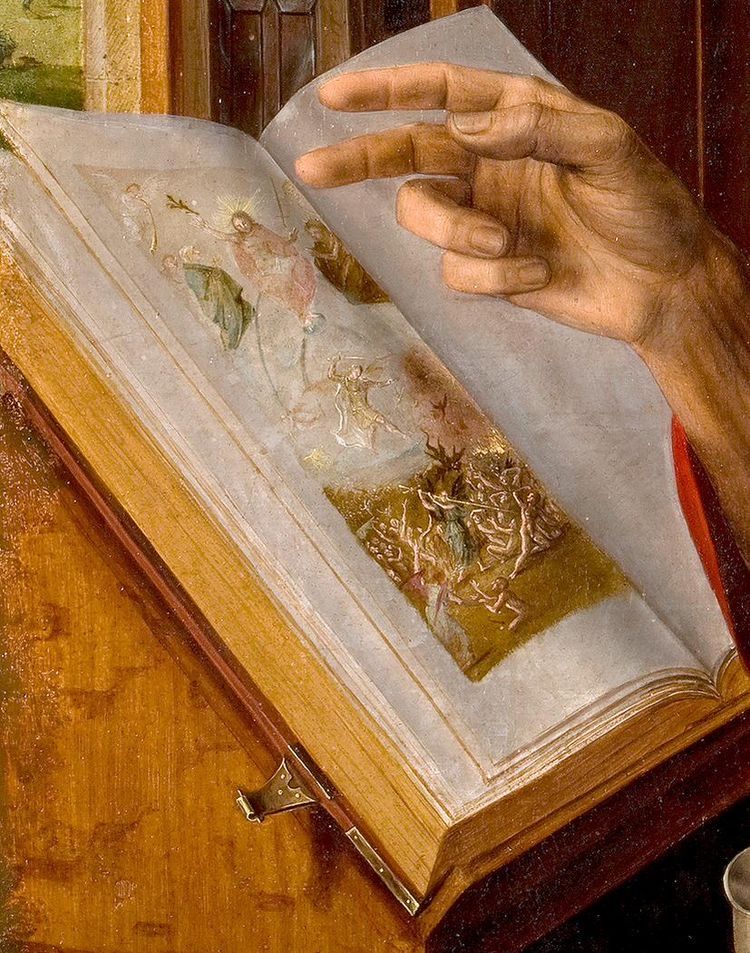
There are examples of manuscripts written on bark and palm leaves, medieval jeweled bindings, lavishly illustrated prayer books, and religious materials from every corner of the globe.
The common thread weaving through the collection of artifacts is one of quality and pure, physical beauty. Hauck had an eye for the remarkable, as was evident by the sheer variety of treasures he gathered.
In 2006, approximately half a century after the collection was placed in their care, the Cincinnati Museum Center made the difficult decision to sell the entire collection and tapped auction behemoth Christie’s for the task. The sale, which took place over the 27th and 28th of June 2006, encompassed 686 separate lots. Christie’s placed the sale estimate at approximately $4.5 million. When the last hammer fell the total sales had exceeded that number by nearly threefold, grossing an impressive $12,401,780.
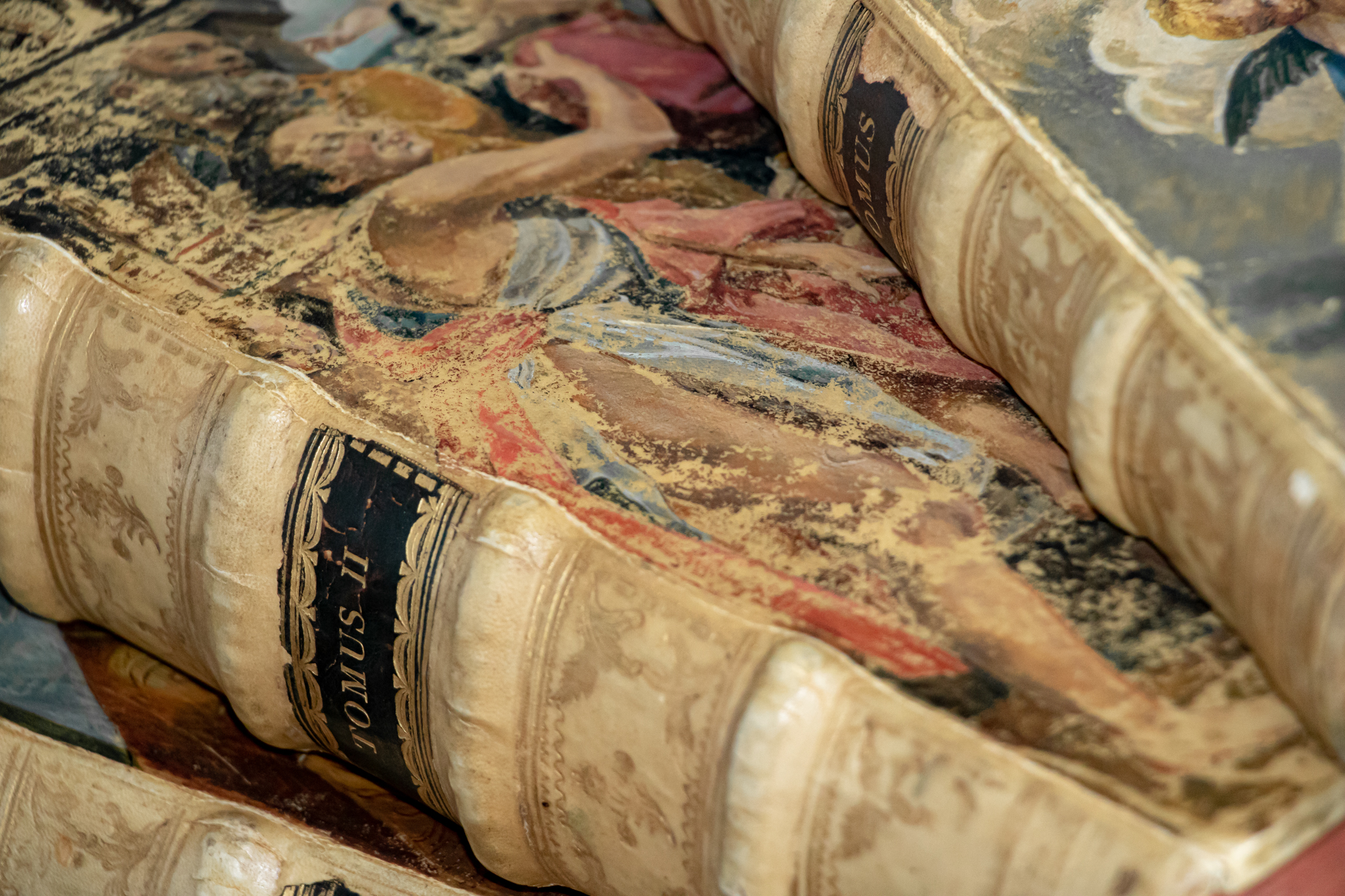
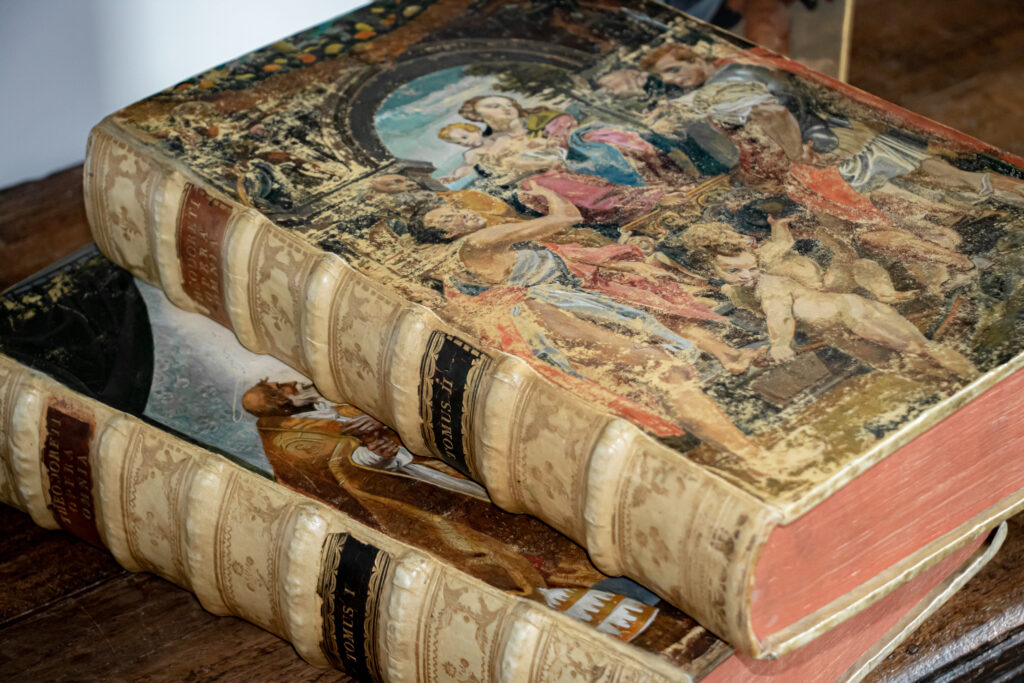
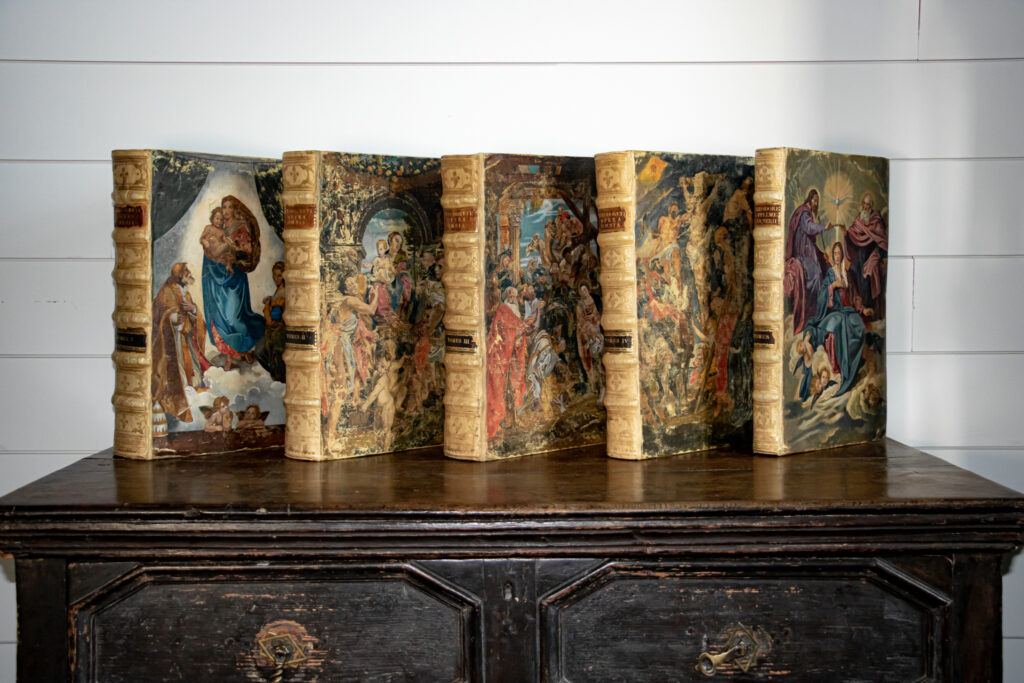
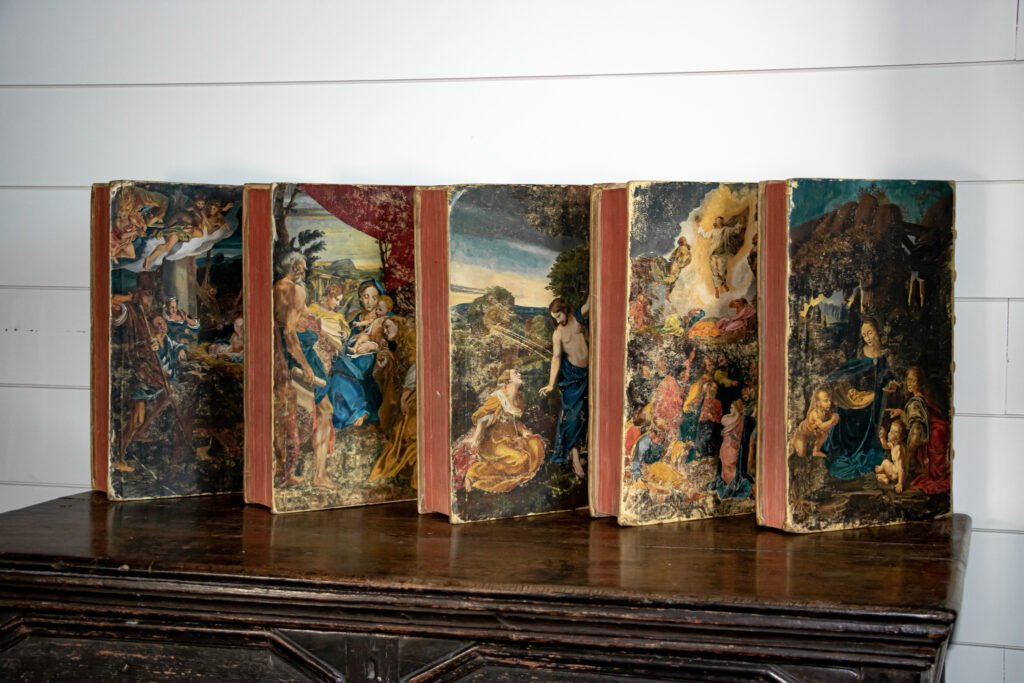
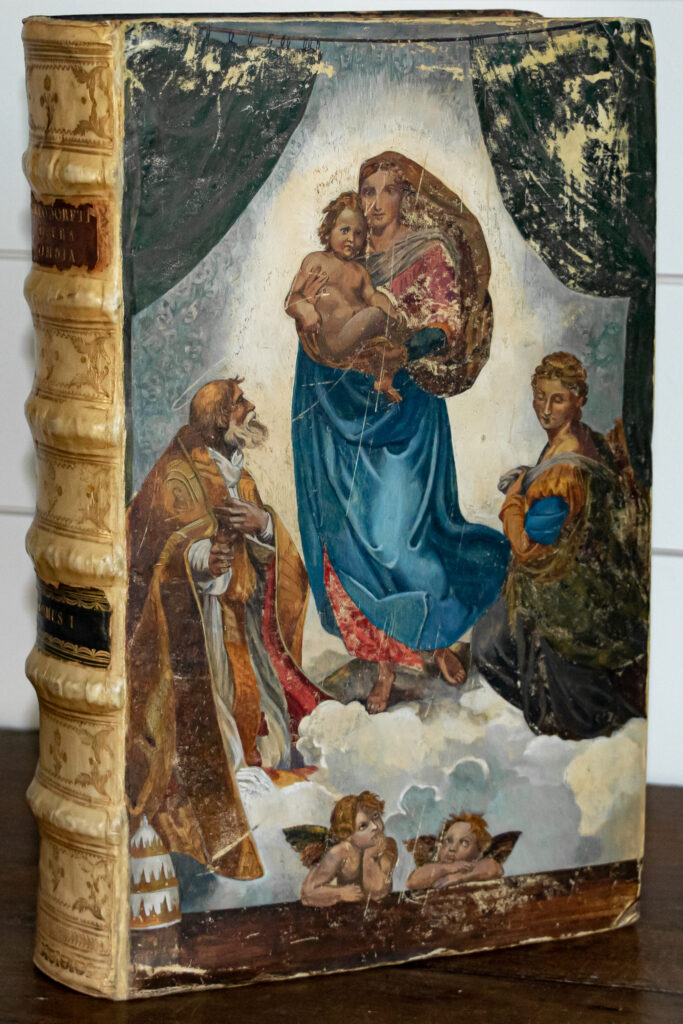
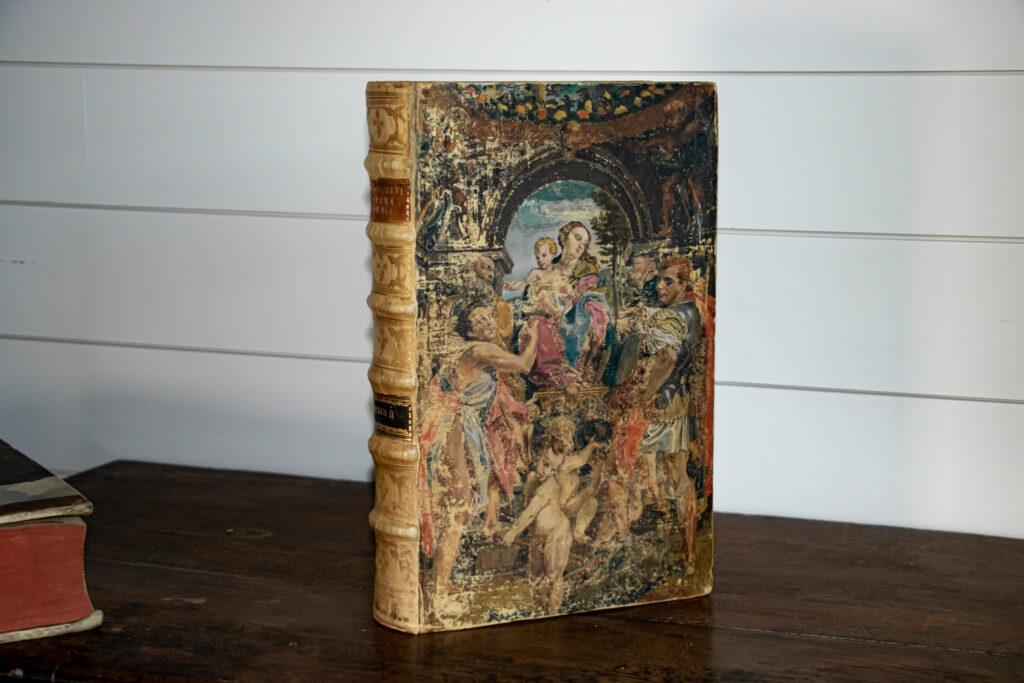
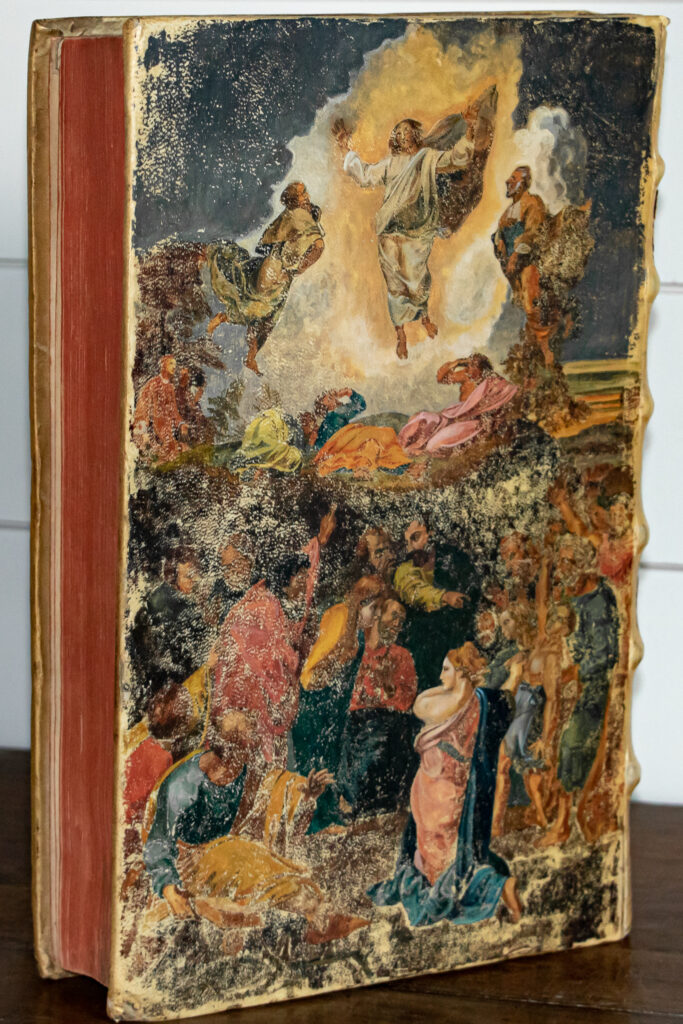
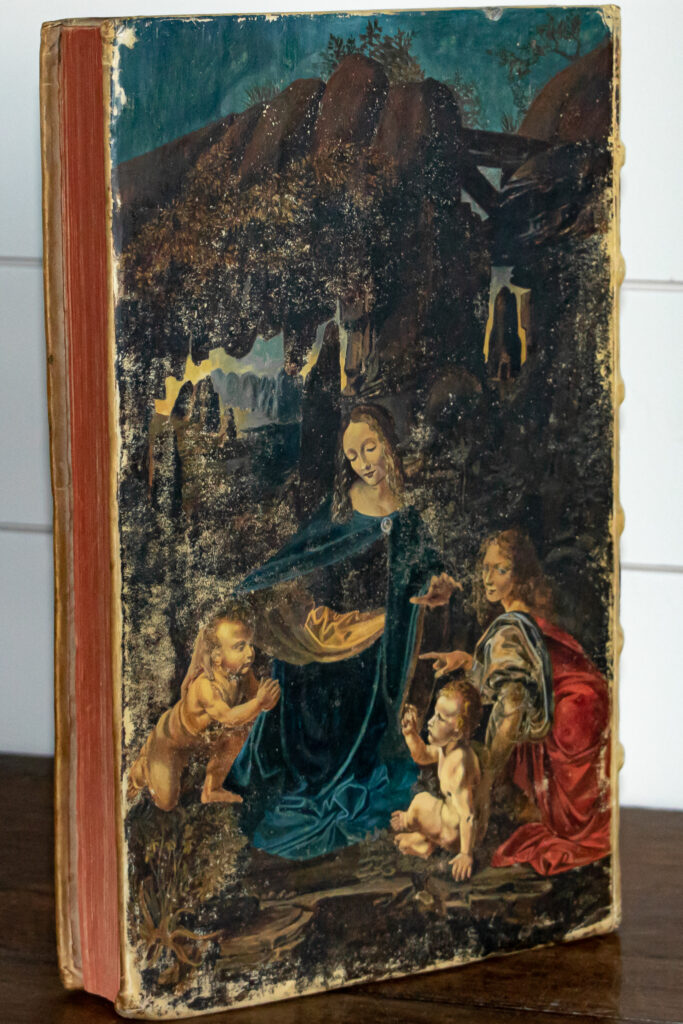
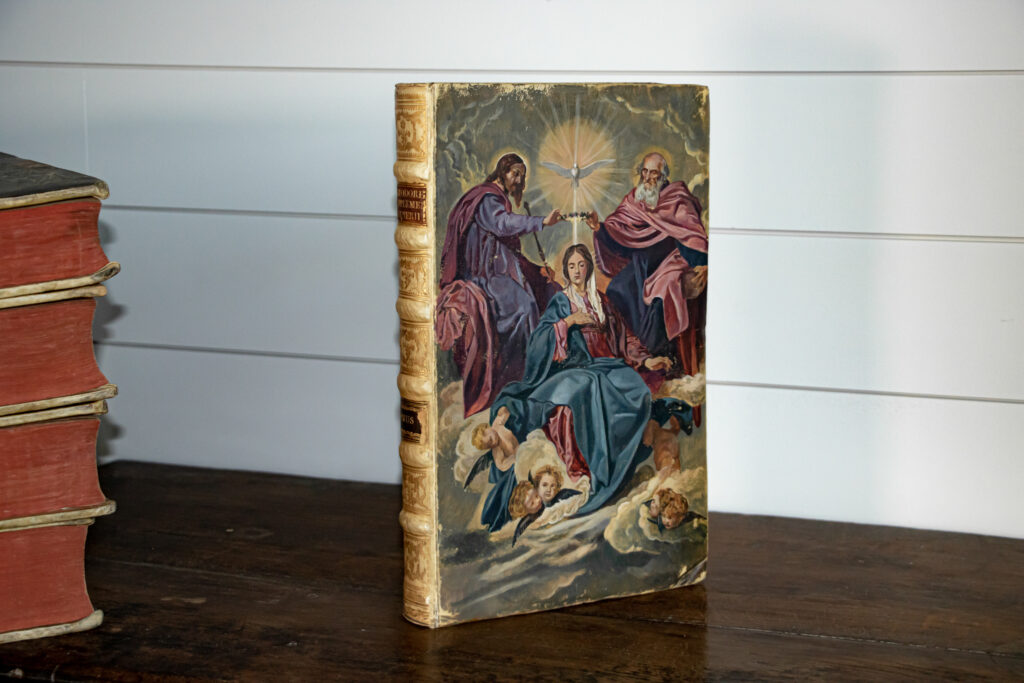
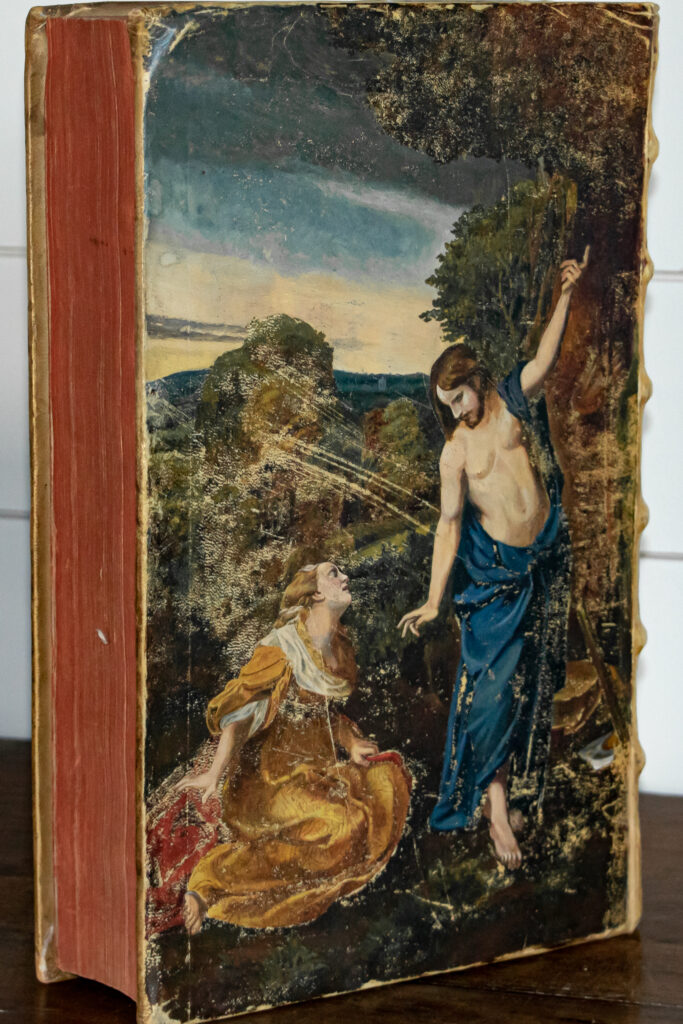
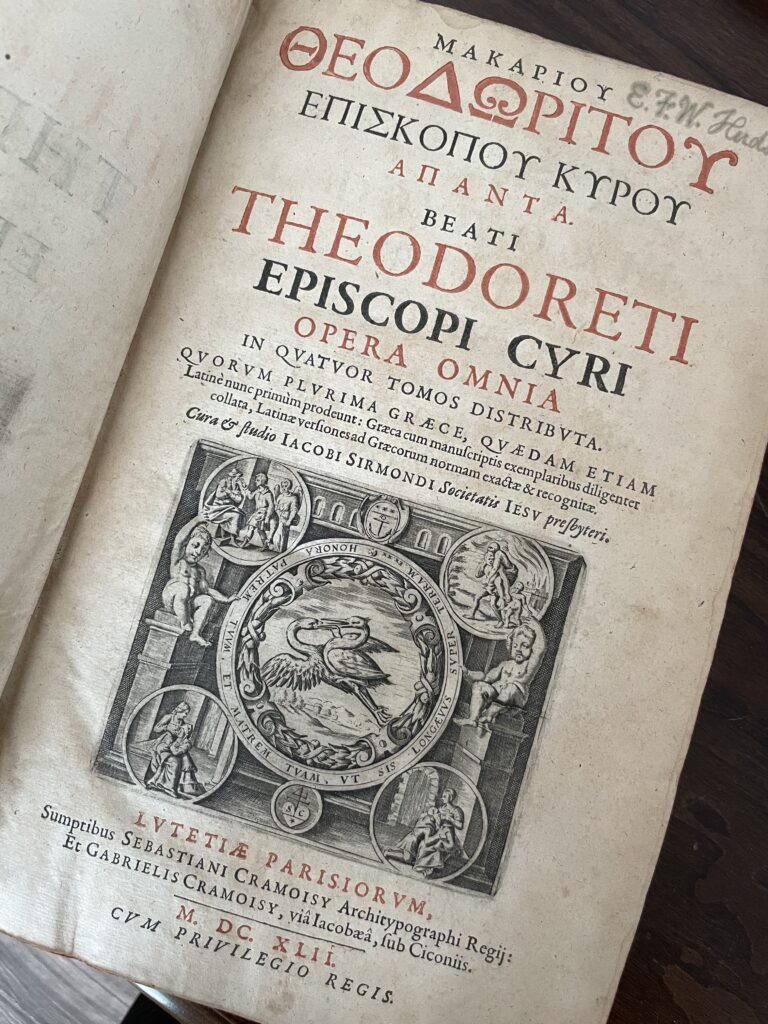
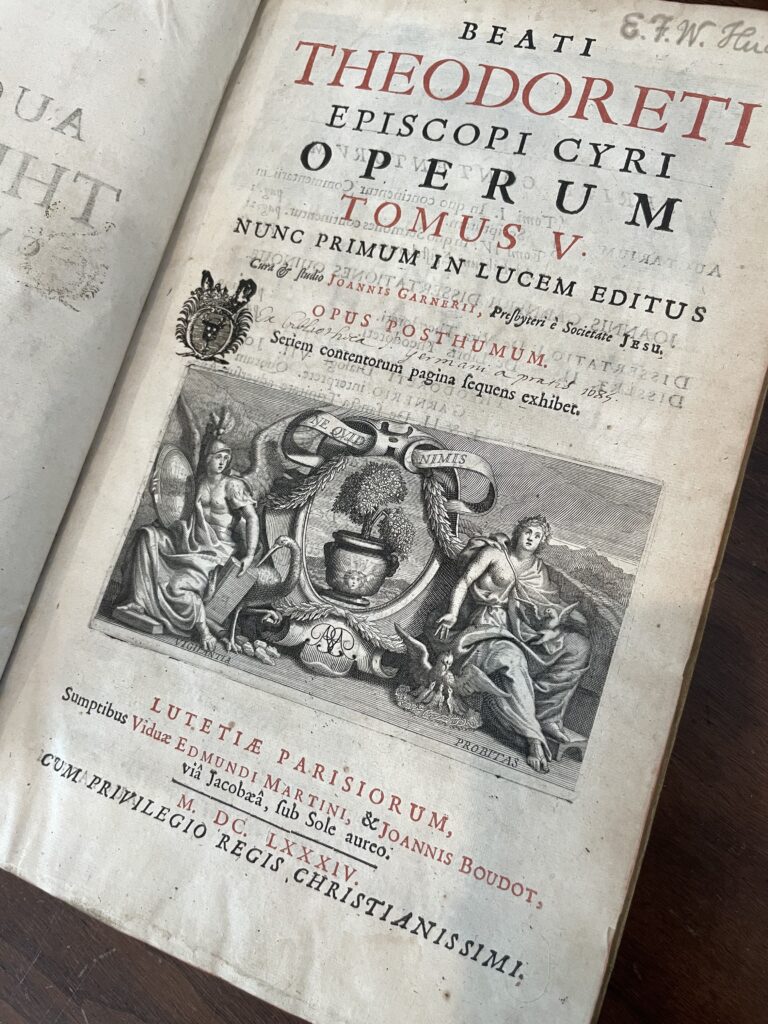
Several years ago I stumbled across a listing online for a stunning set of painted 17th century vellum folio – 5 hefty tomes published from 1642 to 1684. After digging into the details of the listing I discovered that the set had, a little over a decade before, sold as lot 342 of Hauck’s ‘The History of the Book’ sale at Christie’s.
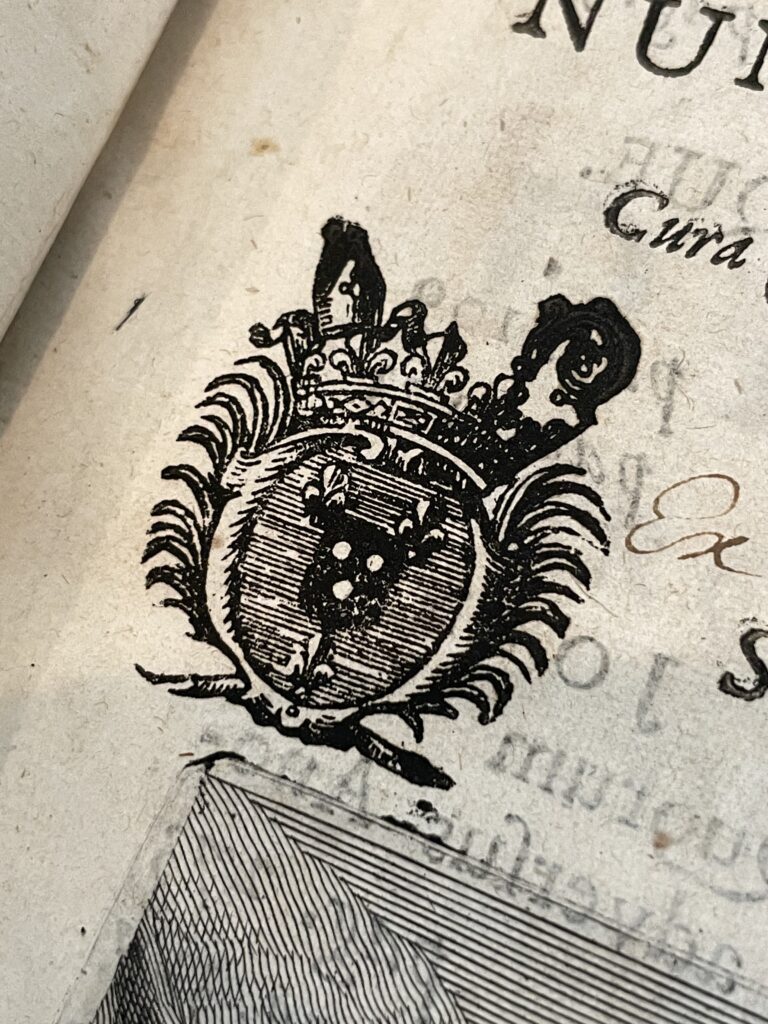
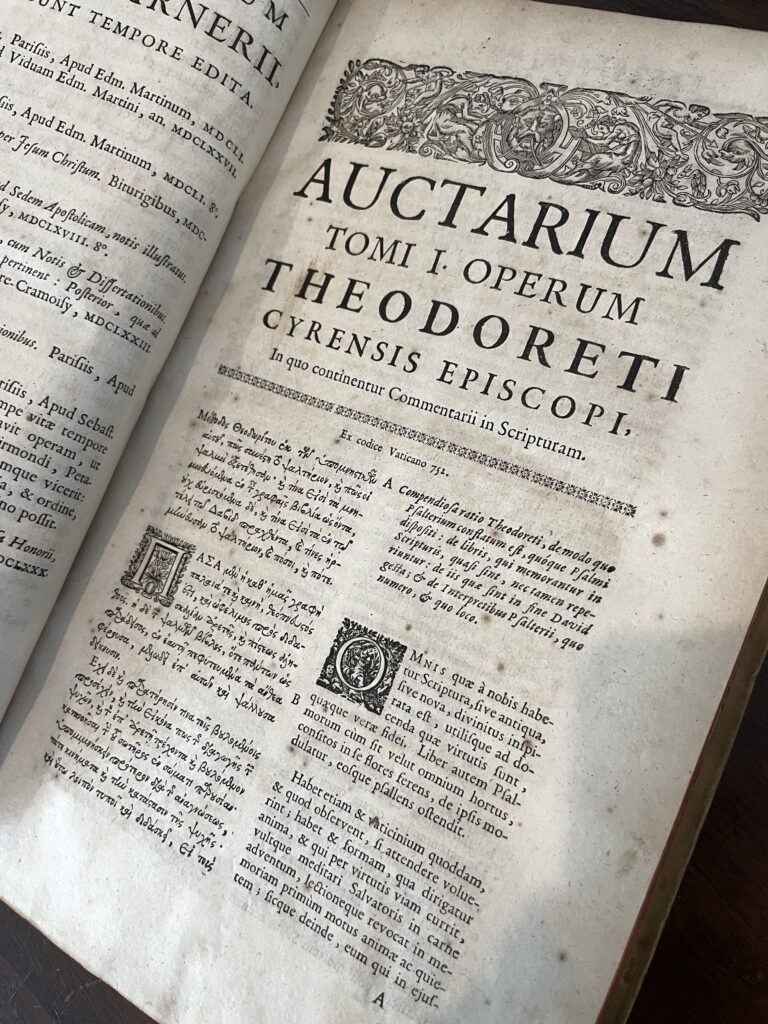
The set encompassed the total works of Theodoretus, Bishop of Cyrus, and, after spending time on the shelves of the 6th century French St Germain de Pres Abbey’s library, was acquired by Hauck from Offenbacher in 1962.
However interesting, it wasn’t the contents of the set that caught my attention. I was transfixed by the vibrant and expressive baroque-style religious scenes painted on the front and rear boards and, not having a solid grasp of the value of such a set, decided to make what I thought was an extremely conservative bid. I was surprised when I learned my bid had won, and several days later welcomed the set into my library.
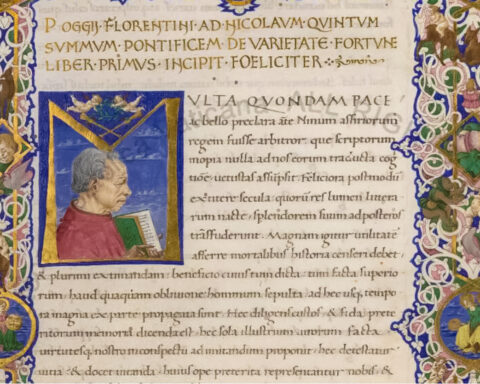
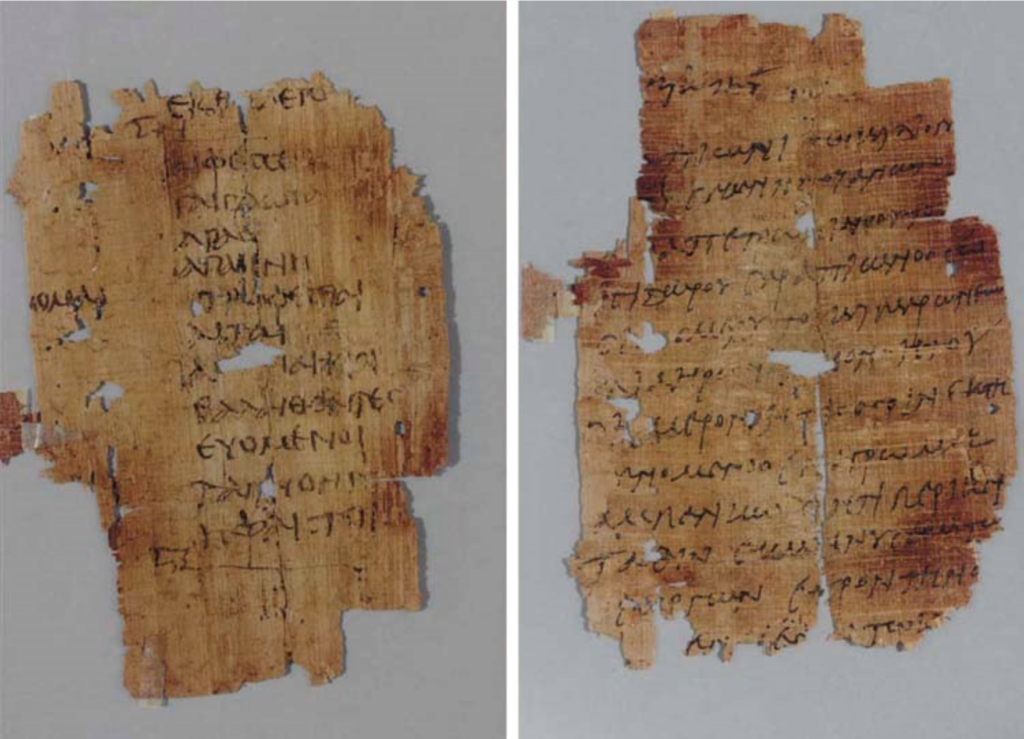
Another favorite is lot #11, a 1st century AD papyrus manuscript in Greek of HOMER — Glossary to Book IX of the Iliad, verses 454-468. It’s incredible to believe that something so fragile could survive mostly intact for nearly 2000 years.
Below are a few more lots that caught my eye, although it’s difficult to single any one out. Each item was selected by Hauck only if it met the criteria of “unusual”, which makes simply browsing the catalog an event in itself.
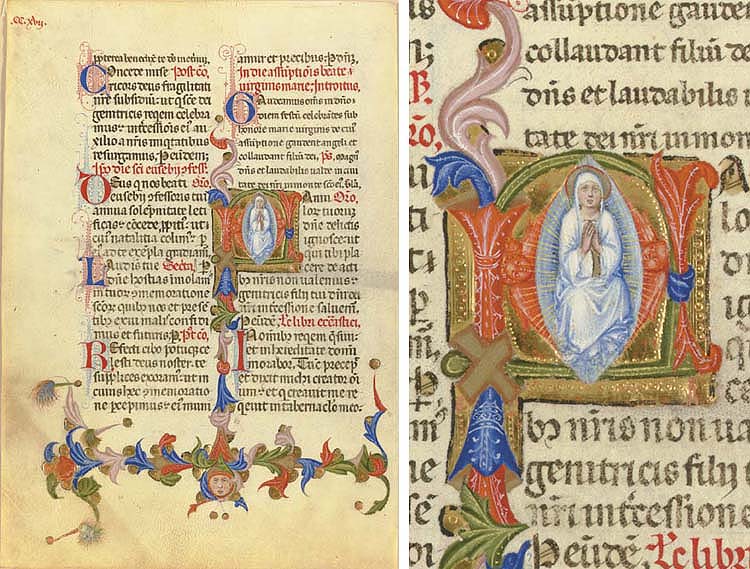


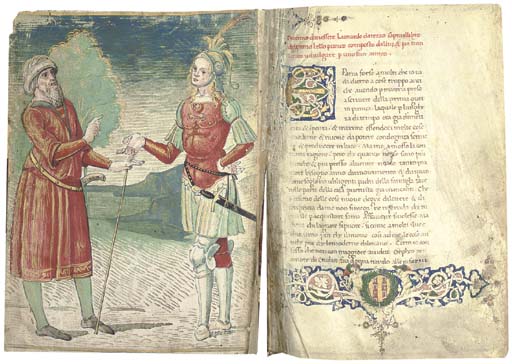

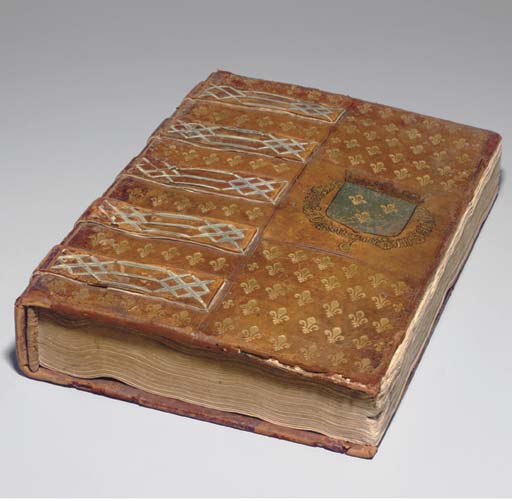
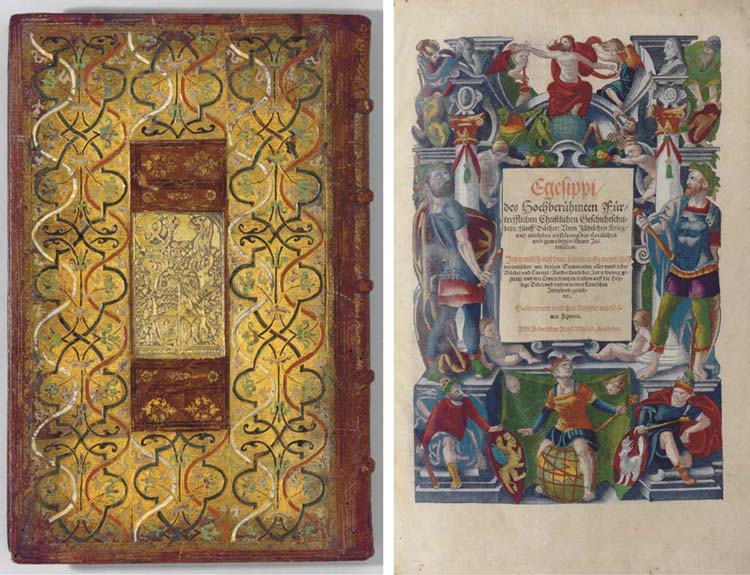
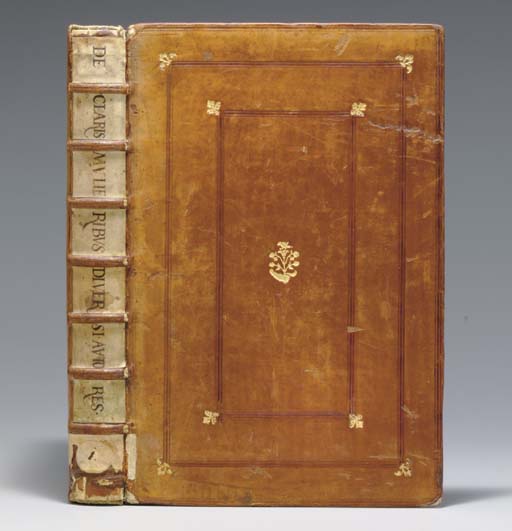
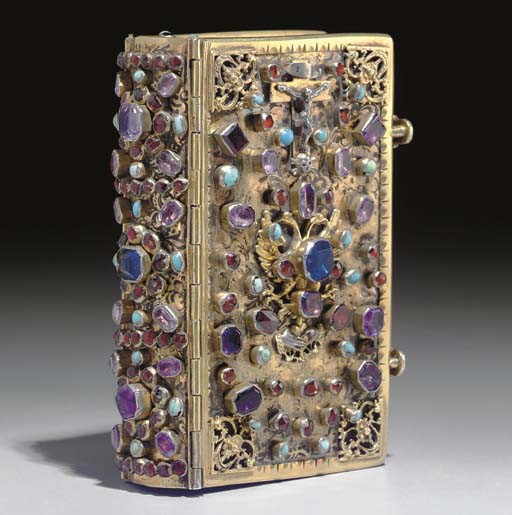
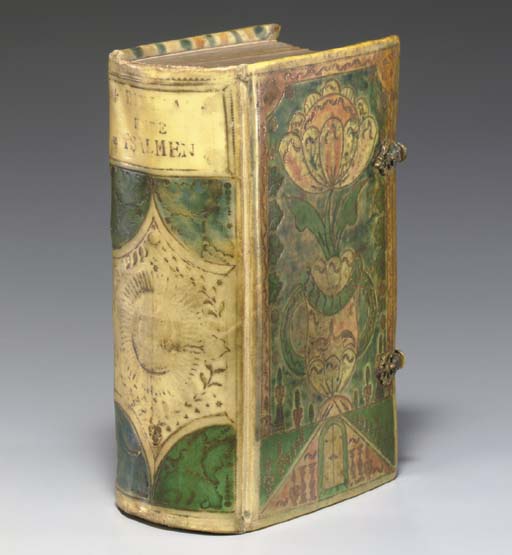

If there’s a more visually striking catalog of books out there I have yet to find it. For anyone who would like to view the full catalog on Christie’s website, it can be found here.
In the wake of the auction, Hauck’s library no longer exists as he assembled it. The tablets, manuscripts, and jeweled bindings now live scattered lives in institutions and private collections across the world — admired, preserved, but separated from the singular vision that once united them.
And yet, something essential remains rooted.
The Cincinnati Historical Center’s decision to retain Hauck’s books on botany and horticulture feels profoundly fitting. For all his bibliophilic ambition, Hauck considered himself first and foremost a gardener. His greatest act of cultivation was not only in books, but in soil, trees, and public green spaces.
That his legacy should endure most visibly in volumes devoted to growth, nature, and stewardship doesn’t feel like an accident. The truest seed of his identity remains planted — still flourishing where he first intended it to.

Want to know more? Check out:
Cincinnati Breweries – Robert J Wimberg